Art and Fine Art Auction Software on AuctionWorx
Artwork data, curated catalogs, reserves and live sales: how AuctionWorx maps to an art auction house.
15+ years on AuctionWorx · RainWorx Premium Partner
This page maps AuctionWorx and Systenics features onto what an art house needs from art auction software. The closest existing solution is the antiques and collectibles platform.
Events edition for scheduled art sales
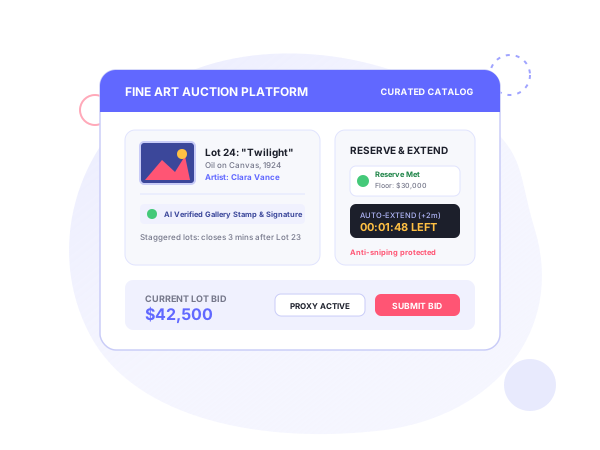
Systenics’ edition comparison lists art sales among the typical Events uses, next to estate liquidations and charity galas. You draft lots into a catalog for a date, set the closing order, and the system calculates staggered closing intervals so the sale finishes in sequence.
Enterprise fits a gallery that lists works continuously and lets each close on its own. It also documents consignment tools: consignor statements, per-consignor fee tiers and commission reporting. A house that runs an open shop plus marquee sales can license both editions.
Artist, medium and provenance fields
Standard listing fields are written for general goods. For art you add custom fields, such as artist, medium, dimensions and provenance notes. Extra fields and layout changes are customization work. Systenics builds customizations as separate assemblies and theme overrides, so an AuctionWorx upgrade doesn’t overwrite them.
Systenics’ antiques and collectibles page stresses authenticity and lists Curated Collections, organized by category, theme or type. That is a workable model for showing works by artist or period. See the antiques and collectibles auction marketplace page.
Catalog building and lot order
Events edition has CSV batch import, so cataloguers can keep the sale in a spreadsheet and load it in one pass. Pre-publish validation catches missing fields. Unsold lots can be copied into the next sale. You set the closing order yourself, and you can group lots to close together or let them end one by one.
Reserves, proxy bidding, auto-extend
Reserve pricing keeps a work from selling under the consignor’s floor. Proxy bidding lets a collector set a maximum and have the system bid in increments. Buy-now is available for fixed-price works. Auto-extend lengthens a lot when bids arrive near the close.
Live sale and AI-assisted descriptions
The Live Auctions add-on puts video and audio on Events edition sales, so a room sale and an online audience run together. An offline team takes room bids, the auctioneer screen tracks who is winning, and broadcasts can be recorded.
The AI listing description add-on drafts descriptions from the photos. A specialist should still read every one before publishing.
White-label mobile apps for iOS and Android give bidders real-time bidding and push notifications, and let staff upload photos from the camera or gallery when creating listings.
Payments and hosting
Systenics’ customization guide names Stripe and Authorize.Net for payments. Systenics recommends Microsoft Azure for hosting AuctionWorx. Our hosting and support page is the service side of that.
How an art project runs
Systenics works in four steps. A free discovery call produces a ballpark estimate. Requirements and UI/UX mockups tighten it. The build runs in milestones, then is deployed to your AuctionWorx installation and supported through later updates.
Configure vs customize
| Need | Existing capability | Custom development |
|---|---|---|
| Catalog with staggered closing | Events edition | No |
| Reserves, proxy bids, auto-extend | Documented features | No |
| Artist, medium, provenance fields | Custom fields | Field design and layout |
| Live room and online sale | Live Auctions add-on | Branding |
| Draft lot descriptions | AI description add-on | No |
Frequently asked questions
Ready to build on AuctionWorx?
Book a call or send us your project details, and we'll get back to you with next steps.
